
Dermaplaning consent form
Create a dermaplaning consent form to collect client skin history, contraindications, treatment risks, aftercare confirmation, and electronic signatures online.
- Ready in 5 min
- Add your details
- Collect signatures
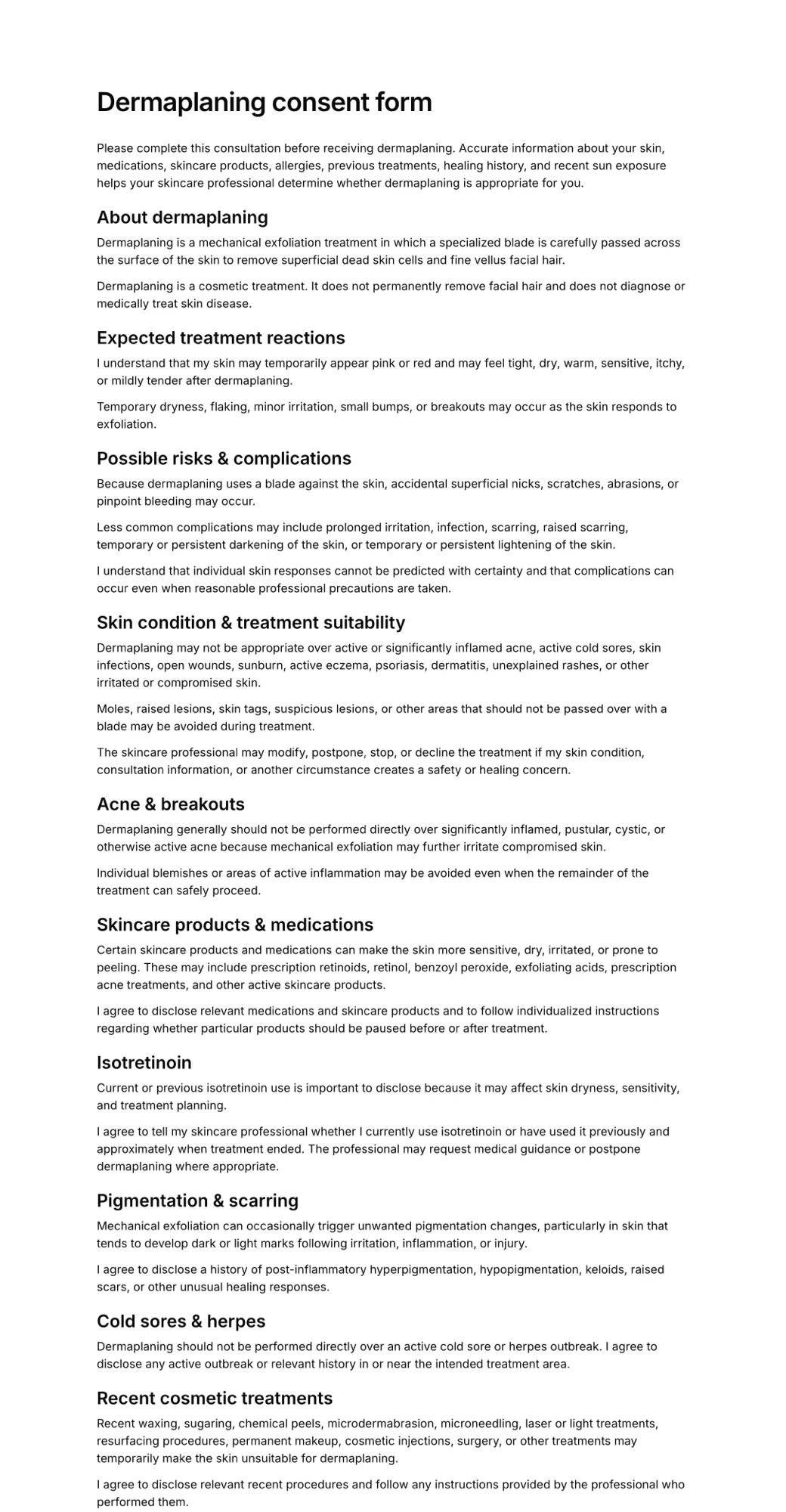


What is Dermaplaning consent form?
A Dermaplaning consent form is a document clients review and sign before receiving a professional dermaplaning treatment.
Dermaplaning is a cosmetic procedure that uses a blade to remove surface skin cells and fine vellus hair from the face.
The consent form helps skincare professionals collect information that may affect treatment, including active acne, skin conditions, allergies, medications, recent cosmetic procedures, previous reactions, healing problems, and other possible contraindications.
It also explains the procedure, expected skin response, potential risks, aftercare requirements, and the client's consent to proceed. Current dermaplaning consent templates commonly include contraindication screening, risk disclosure, aftercare, client information, and signatures.
Med spas, skincare clinics, beauty salons, estheticians, dermatology practices, and independent skincare professionals can customise the form for their treatment protocols and client consultation process.
How to create Dermaplaning consent form
- 1
Create with AI or pick a template
Describe the form you need and let AI create it, or start with a Dermaplaning consent form template. Add your business details, questions and terms.
- 2
Share it with customers
Send a signing link, sign in person, or display a QR code for customers to scan.
- 3
Collect and manage signatures
See who has signed, search customer records, and download signed Dermaplaning consent form PDF whenever you need them.
Free AI waiver generator
Make a custom dermaplaning consent form with AI
Describe your business and our AI waiver generator drafts a dermaplaning consent form tailored to your activity, rules and risks. Edit it, share it by link or QR code, and collect e-signatures.
- Free to start
- No credit card
- Edit before you share
Frequently asked questions
What is a Dermaplaning consent form?
A Dermaplaning consent form is a document clients review and sign before receiving a professional dermaplaning treatment.
It records relevant skin and health information, explains the procedure and possible risks, and documents the client's informed consent to proceed.
What should a Dermaplaning consent form include?
A Dermaplaning consent form may include client details, skin concerns, allergies, medications, active skin conditions, previous cosmetic treatments, contraindications, treatment information, possible risks, aftercare instructions, photo consent, and a signature.
Current dermaplaning consent forms commonly include procedure information, contraindications, risks, limitations, and signed client consent.
What risks should a Dermaplaning consent form mention?
Possible risks may include temporary redness or irritation, superficial cuts or abrasions, infection, scarring, and changes in skin pigmentation. The exact risks included should reflect the procedure, the client's skin condition, and the treatment protocol being used.
Should a Dermaplaning consent form ask about acne?
Yes. Active or inflamed acne can be relevant when determining whether dermaplaning is appropriate because treatment may further irritate affected skin.
The form can ask about active acne, breakouts, open lesions, recent acne treatments, and other skin conditions before treatment.
Should a Dermaplaning consent form ask about retinoids and medications?
Yes. The client consultation can include questions about retinoids, prescription skincare, medications, and recent treatments that may affect skin sensitivity or healing.
Existing dermaplaning consultation forms commonly ask clients about recent Vitamin A or retinoid use and other relevant treatments.
Should the form ask about recent cosmetic treatments?
Yes. Clients can be asked about recent chemical peels, laser treatments, waxing, injectables, resurfacing procedures, or other treatments performed on the area.
This helps the practitioner identify information that may affect when or how dermaplaning should be performed.
Should a Dermaplaning consent form include aftercare instructions?
Yes. The consent process can include aftercare information explaining what the client may experience after treatment and how to care for the skin.
The instructions should reflect the practitioner's treatment protocol and may address temporary sensitivity, skincare products, exfoliation, and sun exposure.
Is an online Dermaplaning consent form legally binding?
An electronically signed Dermaplaning consent form may help document informed consent when treatment information is clearly presented, the client actively agrees, and a reliable signed record is retained.
Its legal effect depends on the wording, circumstances, professional requirements, electronic-signature rules, and applicable jurisdiction. Businesses should customise the form for their services and local requirements.
Related templates
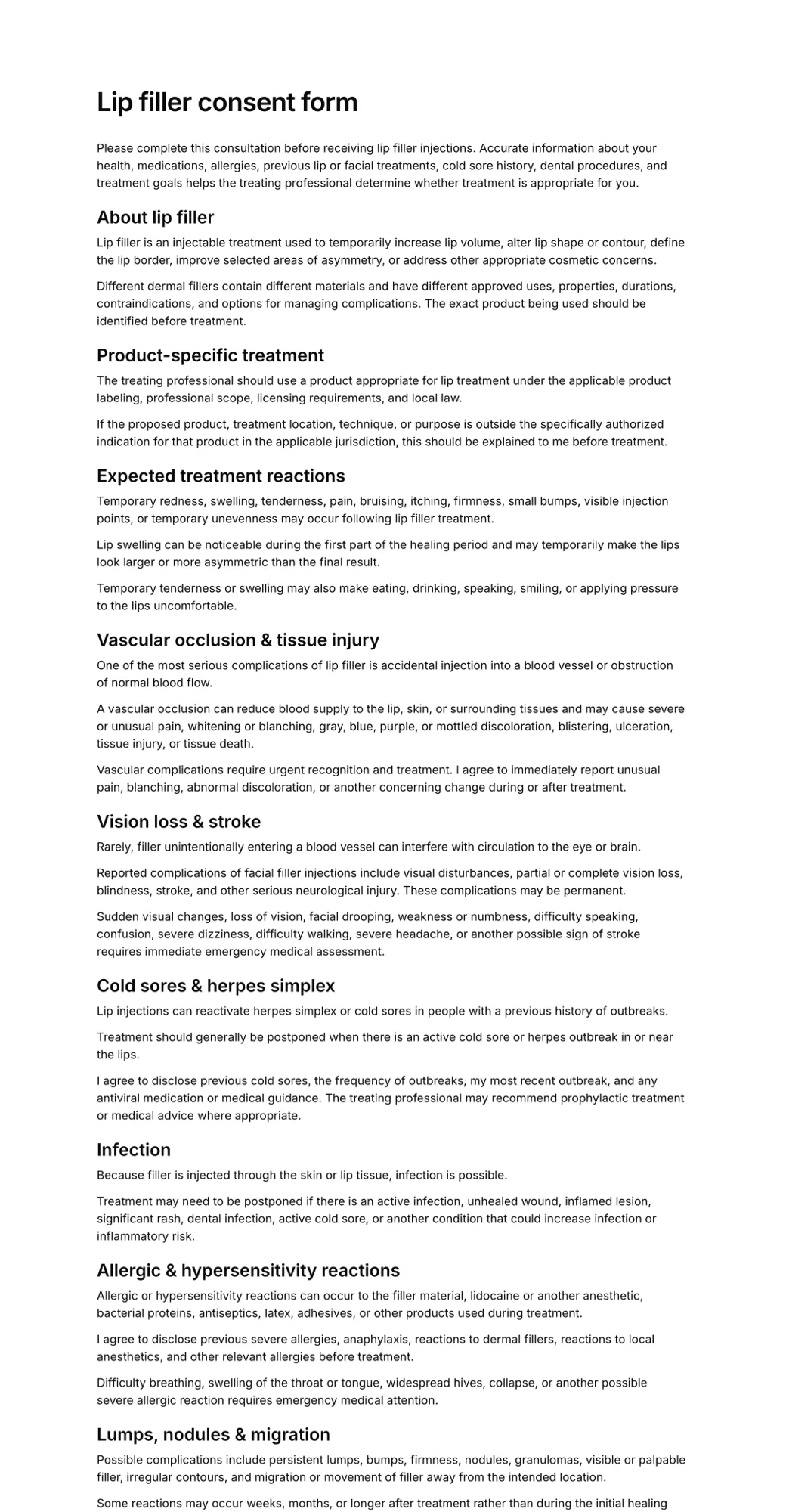
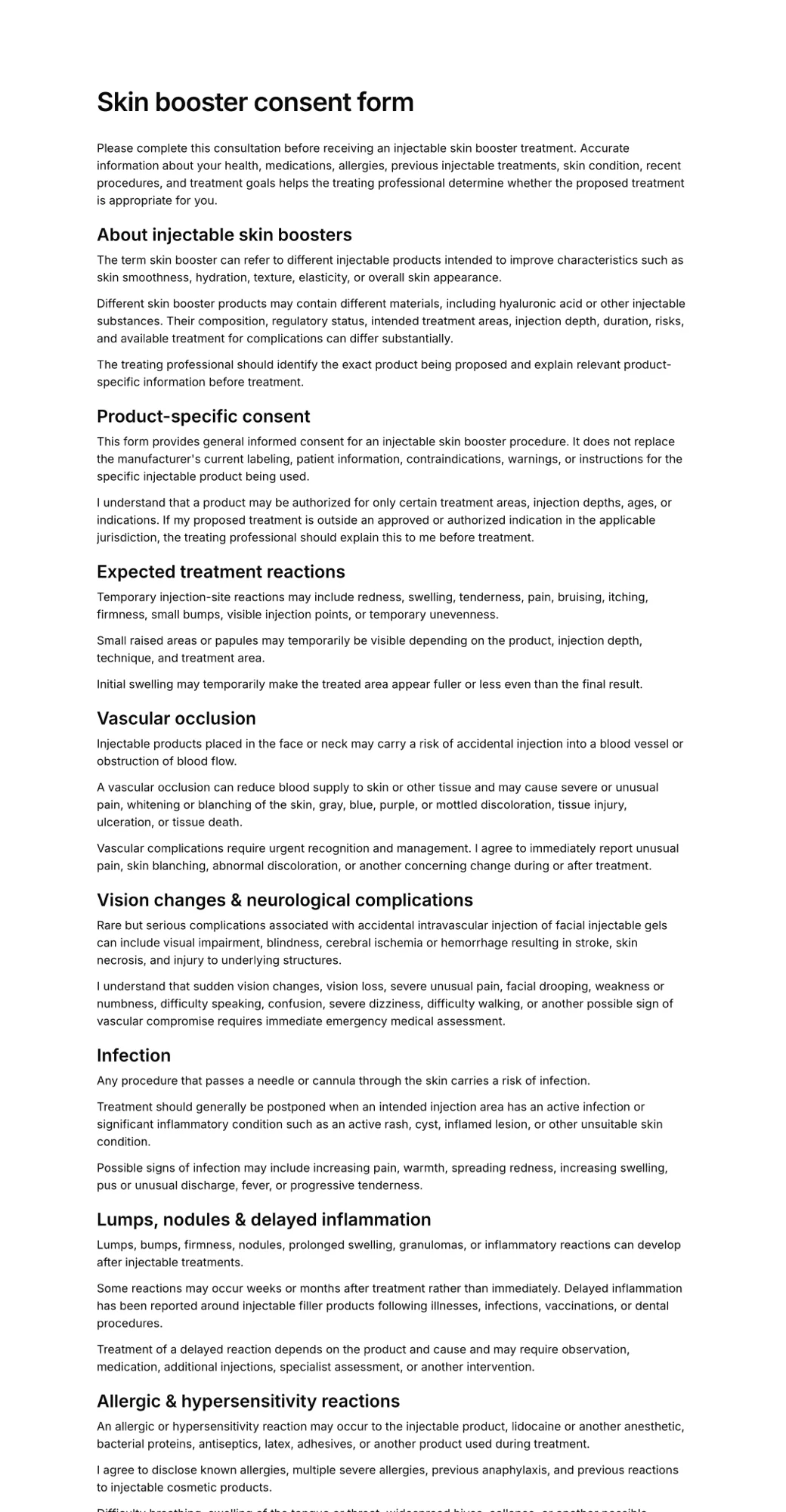
More forms businesses use alongside the dermaplaning consent form.
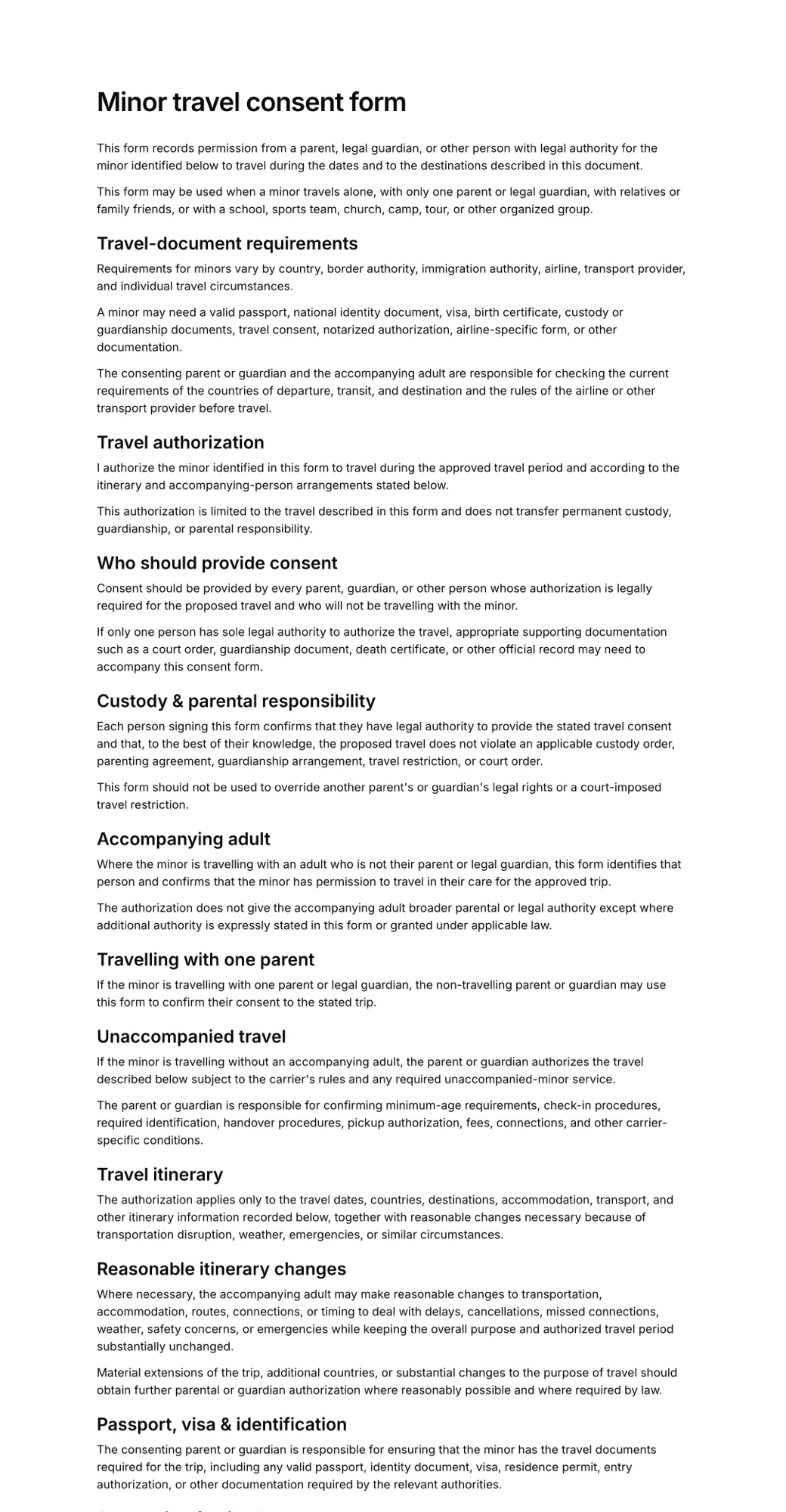
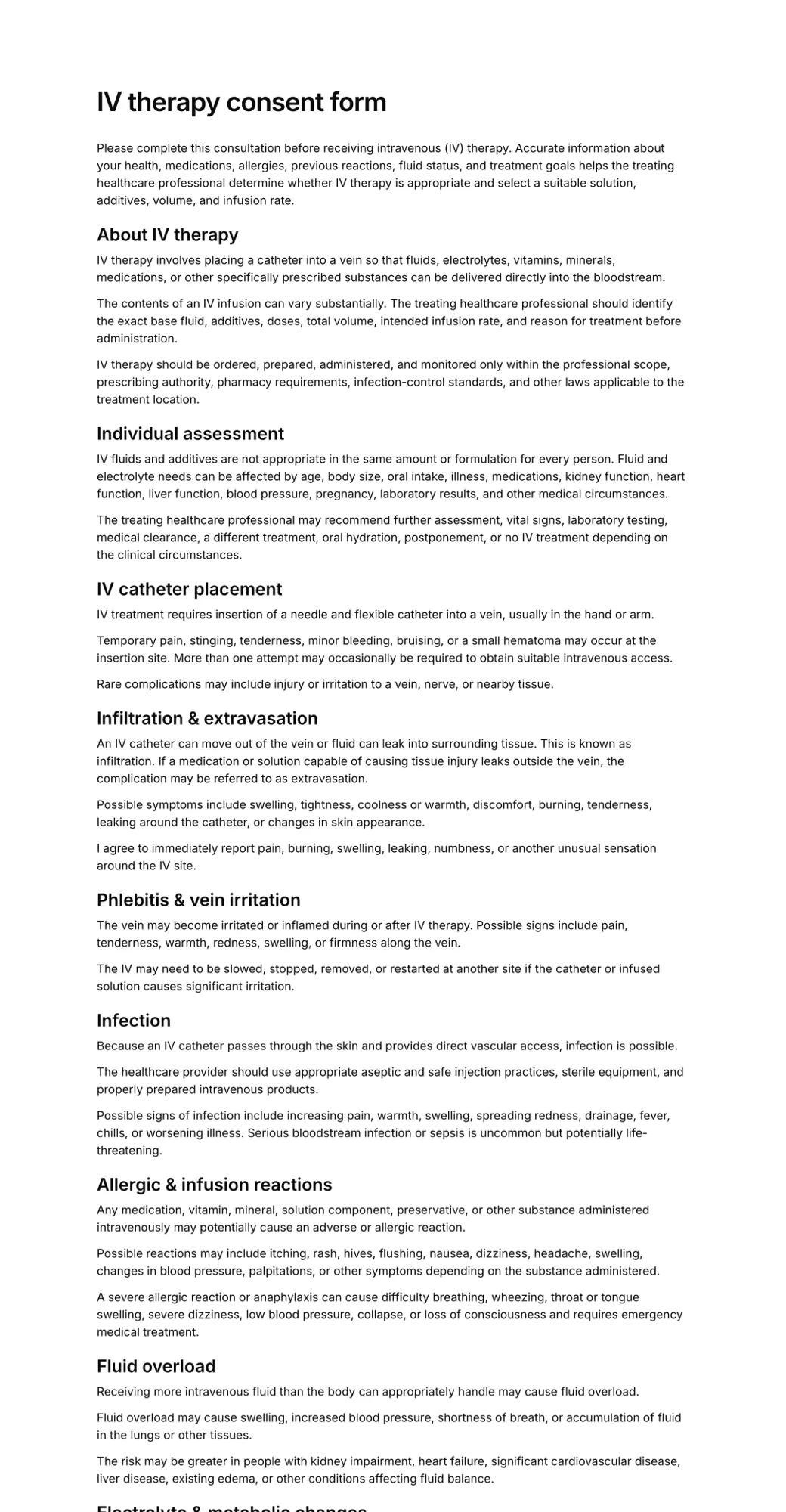
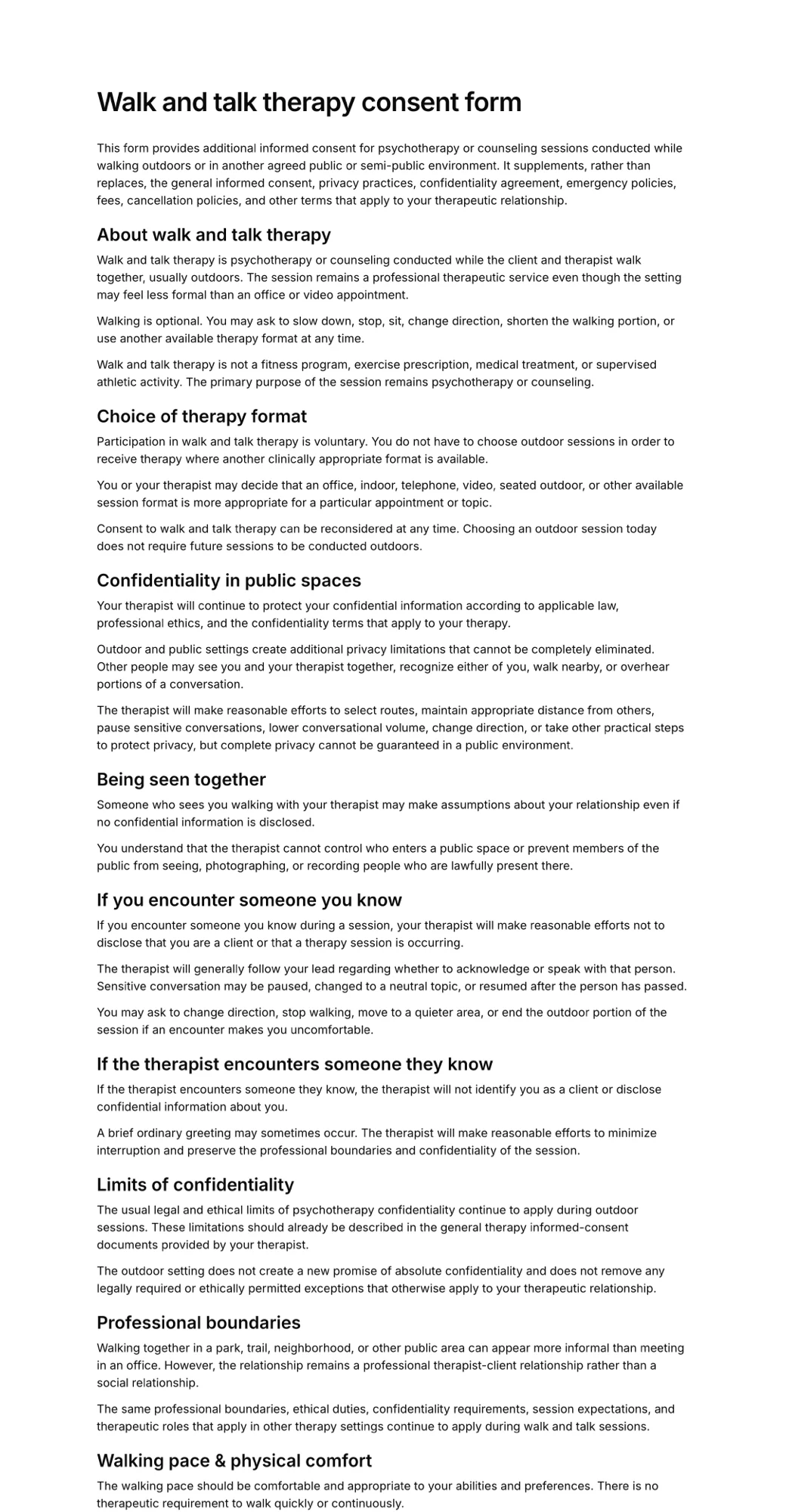
Get started in minutes
- Create in minutes
- Add your details
- Collect signatures