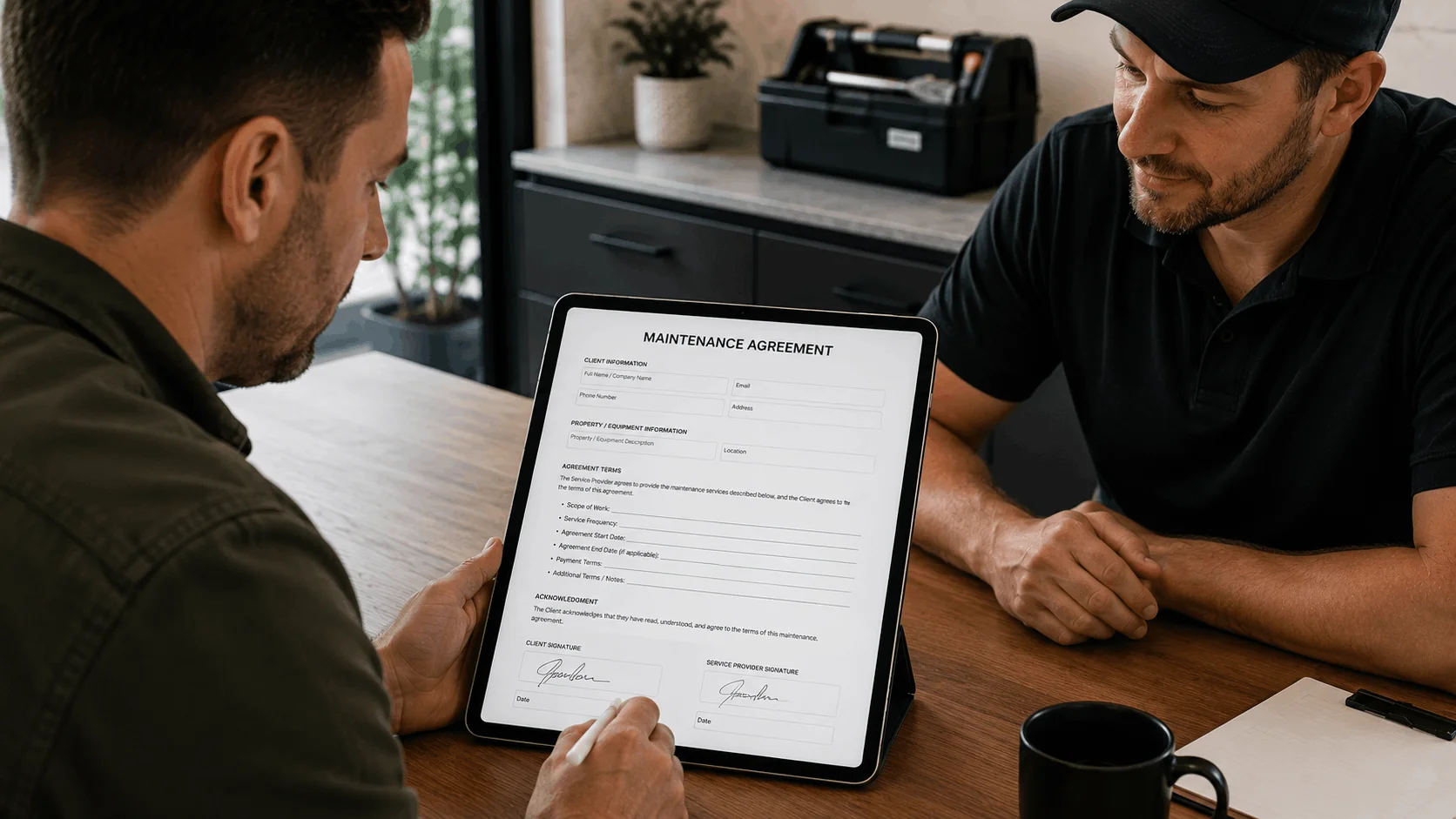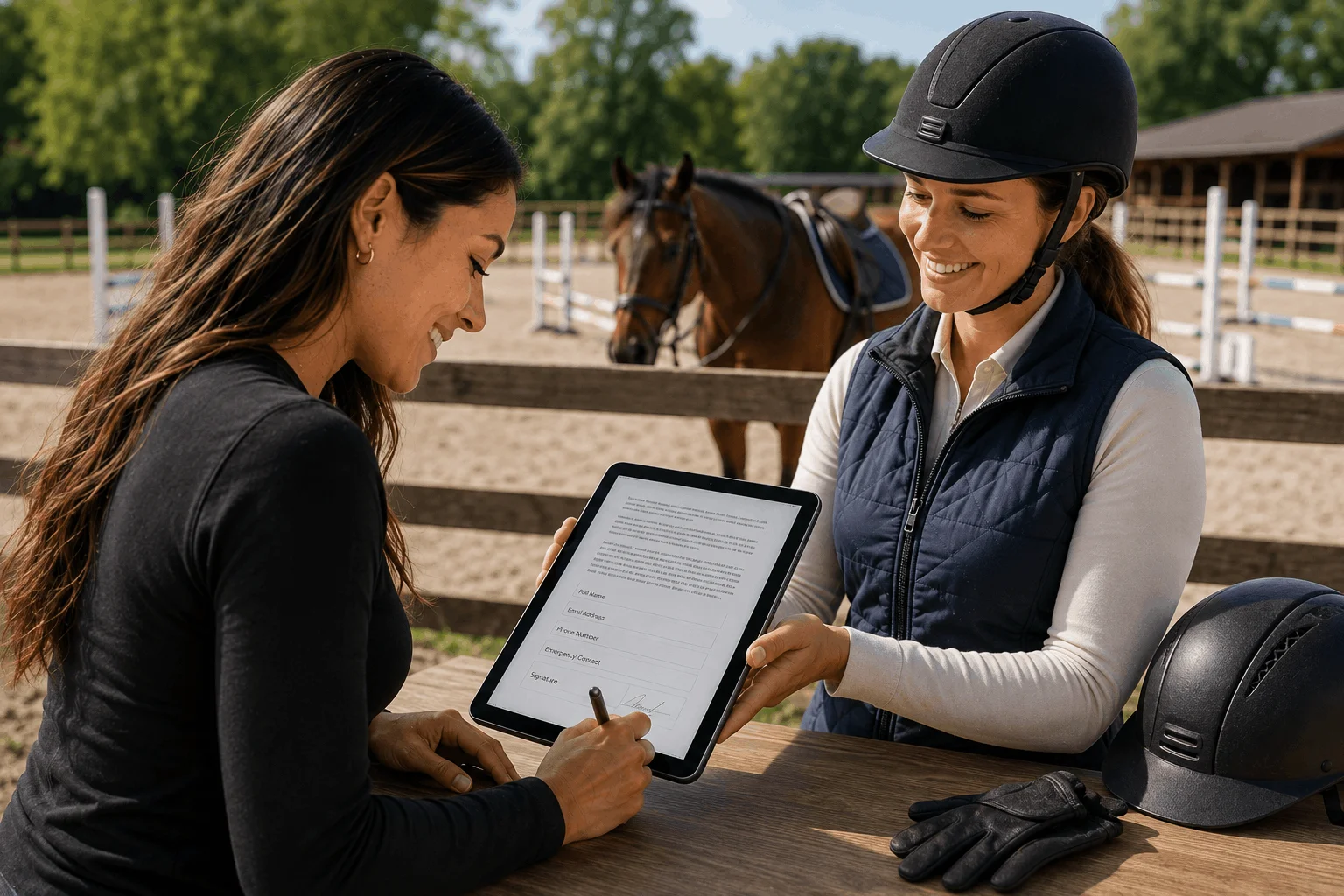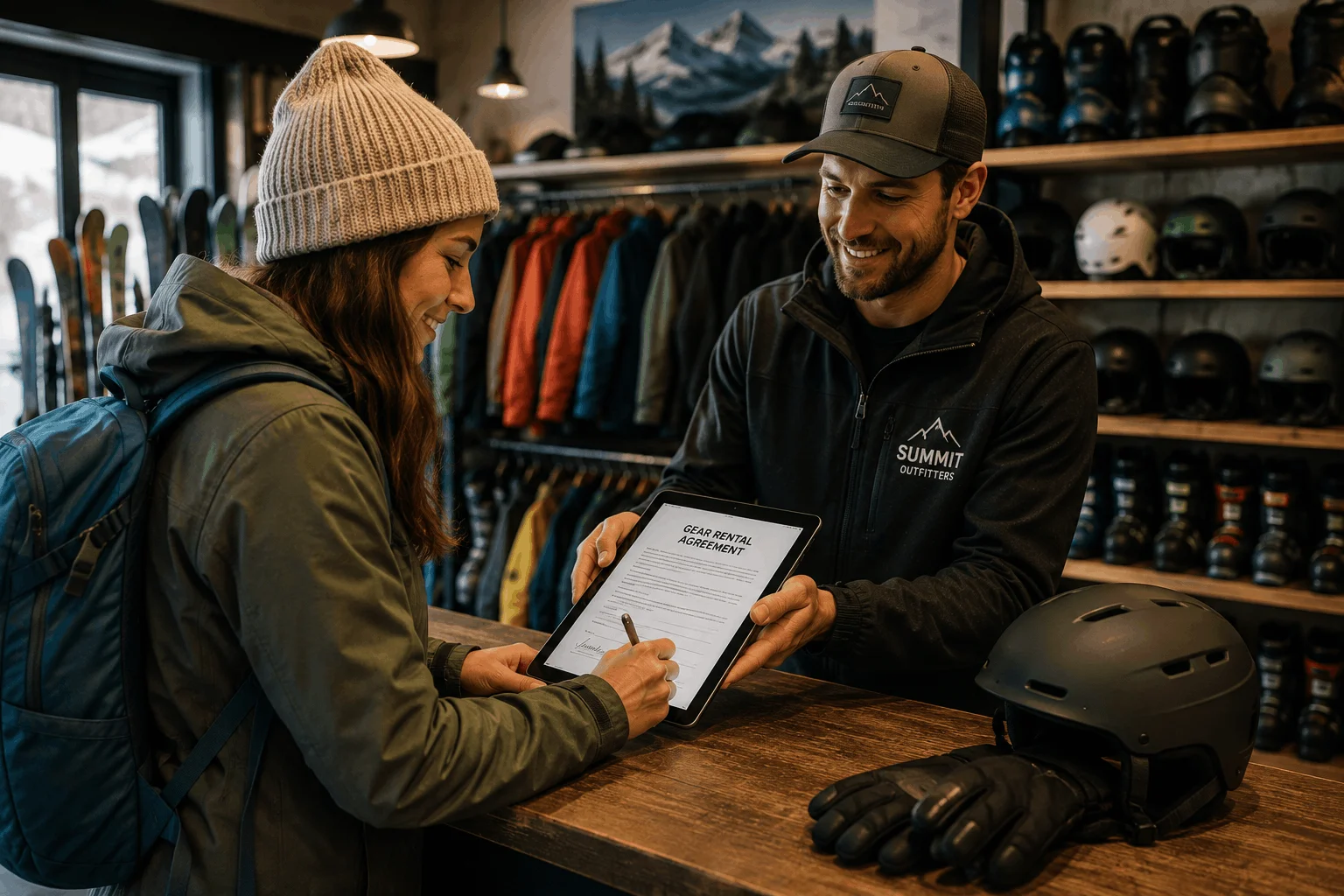
An equipment rental agreement is the contract a customer signs before taking rented equipment. It sets out what is being rented, for how long, what it costs, who is responsible for damage or loss, and the rules for using and returning it.
Bikes, kayaks, camping gear, ski equipment, power tools, party equipment and ATVs all go out the door with a customer and, hopefully, come back in the same condition. A clear equipment rental agreement makes the terms obvious before the handover, so there are fewer disputes about late returns, scratches and missing parts later.
This guide covers what an equipment rental agreement is, how it differs from a rental waiver, what to include, a sample structure you can adapt, and how to get rental agreements signed online before pick-up. It is general information, not legal advice. Rental and consumer rules differ between countries and states, so have your final agreement reviewed for where you operate.
What is an equipment rental agreement?
An equipment rental agreement, also called an equipment lease agreement, gear rental agreement or rental contract, is an agreement between a rental business (the owner) and a customer (the renter). It records:
- the equipment being rented and its condition
- the rental period, pick-up and return
- fees, deposits and charges
- the renter's responsibilities for safe use and care
- what happens if the equipment is damaged, lost, stolen or returned late
- liability terms and the renter's signature
Short-term consumer rentals usually use a simple one or two-page agreement signed at pick-up. Longer commercial equipment leases are more complex and often negotiated separately. This guide focuses on everyday customer rentals.
Equipment rental agreement vs rental waiver
The two documents are often confused, and many businesses combine them into one form:
- A rental agreement is mainly about the commercial deal: the equipment, rental period, fees, deposit, damage and return terms.
- A rental waiver is mainly about risk: the customer acknowledges the dangers of using the equipment and releases the business from certain claims.
If the equipment carries a real risk of injury, such as bikes, boats, ATVs, climbing gear or power tools, most rental businesses include both parts in the same signed document. If you rent boats, our boat rental liability waiver guide covers the water-specific terms.
What should an equipment rental agreement include?
1. Owner and renter details
- business name and contact details
- renter's full name, phone number and email
- address, if you need it for returns or deposits
- for vehicles and specialist equipment, licence or ID details you check at pick-up
2. Equipment description
List exactly what is being rented so there is no argument about what went out:
- type, make and model
- quantity and accessories, such as helmets, locks, chargers, paddles or cases
- serial numbers or your own asset numbers for valuable items
3. Condition at pick-up
Record the condition before the customer leaves, including existing scratches, dents or wear. Many businesses inspect the equipment with the customer and note anything already damaged, and take dated photos in their own system. The renter then confirms the equipment was in good working order, apart from anything noted.
4. Rental period and return
- start and end date and time
- where the equipment is collected and returned
- what counts as a late return, and when after-hours returns are allowed
- what happens if the renter wants to extend
5. Fees, deposit and charges
Spell out every charge so the customer isn't surprised:
- rental price and what it covers
- security deposit and when it is refunded
- late return fees
- cleaning, refuelling or recharging charges
- delivery and collection fees, if any
Your rental agreement describes these terms. Take payments and deposits through your usual booking or payment system.
6. Renter responsibilities and safe use
The renter agrees to:
- use the equipment only for its intended purpose
- follow the operating and safety instructions provided
- wear any required protective equipment
- keep the equipment secure and not lend it to others
- not use it under the influence of alcohol or drugs
- stop using it and contact you if it develops a fault
7. Prohibited uses
Name the uses you don't allow, for example commercial use, off-road use of road bikes, towing, use outside a permitted area, or taking the equipment abroad.
8. Damage, loss and theft
Explain who pays for what:
- damage beyond normal wear and tear
- lost parts and accessories
- theft, and whether the renter must report it to the police
- how repair or replacement costs are calculated
9. Malfunctions and repairs
The renter should stop using faulty equipment, tell you straight away, and not attempt repairs without permission. Say whether you will replace the equipment or refund unused rental time.
10. Assumption of risk and release of liability
For equipment that can cause injury, add a section in which the renter acknowledges the risks and releases the business from certain claims, to the extent permitted by law. Keep it clear and visible rather than hidden in small print.
11. Indemnity and insurance
Some agreements ask the renter to cover claims arising from their own use of the equipment, or to confirm whether they have insurance for it. These terms are not enforceable everywhere, so check them locally.
12. Cancellation policy
Explain what happens if the customer cancels, arrives late, or the rental can't go ahead because of weather or safety conditions.
13. Agreement and signature
Finish with a checkbox confirming the renter has read and understood the agreement, followed by their signature and the date. With digital agreements the signing date and time can be recorded automatically.
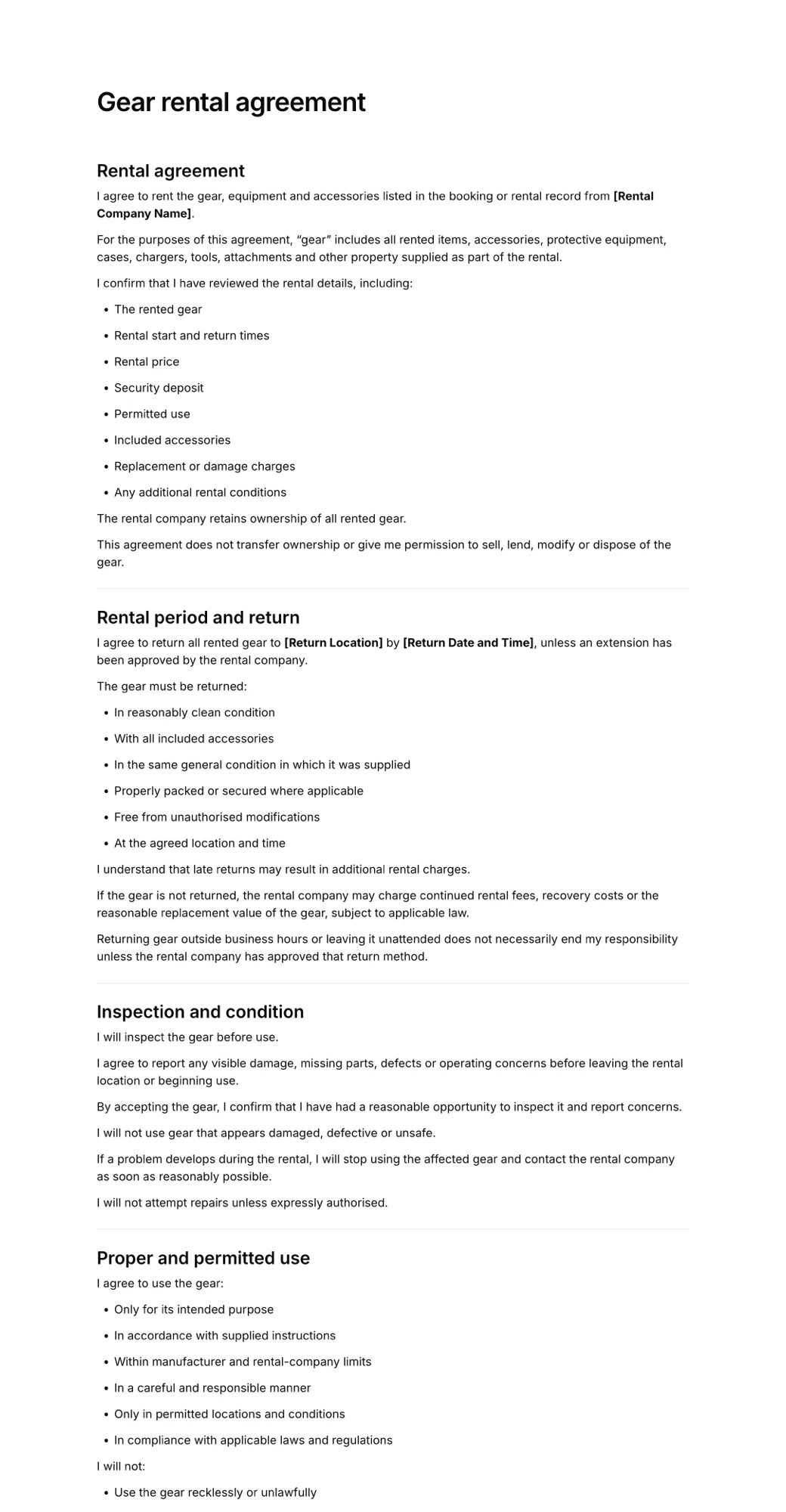
Equipment rental agreement sample structure
Use this outline as a starting point. Replace the bracketed details with your own and adapt each section to your equipment and location.
Equipment Rental Agreement
Owner: [Business Name], [address], [phone], [email].
Renter: full name, phone, email, ID checked at pick-up.
Equipment: [type, make, model, quantity, accessories, asset or serial numbers].
Condition: The equipment was inspected at pick-up and is in good working order, except: [noted damage].
Rental period: from [date and time] to [date and time]. Returns after [time] are charged at [late fee].
Charges: rental fee [amount], deposit [amount], refunded within [period] after the equipment is returned in the same condition, apart from normal wear and tear.
Use: I will use the equipment only as intended, follow the safety instructions, wear any required protective equipment, and not lend it to anyone else.
Damage and loss: I am responsible for damage beyond normal wear and tear, and for lost or stolen equipment, at [repair or replacement cost].
Risk and release: I understand that using this equipment involves risks, including [specific risks]. To the extent permitted by law, I release [Business Name] from claims arising from the ordinary risks of its use.
Agreement: I have read this agreement and agree to its terms.
Renter signature and date.
Rental agreements for different types of equipment
The core terms stay the same, but each type of equipment needs its own details.
- Bikes and e-bikes. Helmets, locks, battery charging, permitted routes and theft. See the bike rental waiver.
- Kayaks, paddleboards and boats. Life jackets, weather limits, permitted waters and passenger limits. See the boat rental liability waiver.
- ATVs and powersports. Age and licence requirements, protective gear, fuel and permitted areas. See the ATV rental agreement.
- Camping, ski and outdoor gear. Cleaning, drying, missing parts and sizing. See the gear rental agreement.
- Party and event equipment. Set-up location, supervision of children, weather and collection times. See the bounce house rental waiver.
- Tools and machinery. Training, protective equipment, prohibited uses and fuel.
Common mistakes in equipment rental agreements
- Vague equipment lists. "One bike" makes it hard to prove which bike, or whether the lock and charger came back.
- No record of condition. Without a note of existing damage, every scratch becomes an argument.
- Unclear charges. Hidden or vague fees lead to disputes and chargebacks.
- Waiver without rental terms, or the reverse. For risky equipment you usually need both the commercial terms and the risk acknowledgement.
- Signing at the counter in a rush. Customers who skim the terms are more likely to dispute them later.
- Losing paper copies. An agreement only helps if you can find it after the rental.
Paper vs online rental agreements
Paper agreements slow down pick-up, especially on busy weekends, and they are easy to lose or misread. With an online equipment rental agreement:
- customers read and sign before they arrive, so pick-up is quicker
- every renter in a group signs their own copy on their phone
- you keep a signed, dated record you can open whenever there is a question
How to create an equipment rental agreement online
Here is how to set one up with AgreeDock:
Step 1: Start from a template or AI
Open the gear rental agreement or another rental template, or describe your rental business to the AI waiver generator to get a draft written for your equipment.
Step 2: Add your terms
Fill in your rental periods, deposit, late and damage charges, safe-use rules and cancellation policy, and edit any section to match how you rent.
Step 3: Add renter fields
Include the renter's contact details, any licence or ID questions you need, checkboxes for each key term, and an agreement checkbox above the signature.
Step 4: Share the link or QR code
Add the signing link to your booking confirmation, and keep the QR code at the pick-up counter for walk-up customers.
Step 5: Check before handover
Every signed agreement appears in your Signatures list with the renter's answers and the exact terms they agreed to, and you can download each one as a PDF.
See how rental businesses use AgreeDock for waivers and rental agreements.
Frequently asked questions
What is an equipment rental agreement?
An equipment rental agreement is a contract between a rental business and a customer. It describes the equipment, the rental period and charges, the renter's responsibilities, what happens if the equipment is damaged, lost or returned late, and usually includes a liability release and the renter's signature.
What should an equipment rental agreement include?
Most include owner and renter details, an equipment list with condition at pick-up, the rental period and return terms, fees and deposit, safe-use rules, prohibited uses, damage and loss terms, malfunction procedures, an assumption of risk and release, cancellation terms, and the renter's signature and date.
What is the difference between a rental agreement and a rental waiver?
A rental agreement covers the commercial terms: equipment, rental period, fees, deposit, damage and returns. A rental waiver covers risk: the renter acknowledges the dangers and releases the business from certain claims. For equipment that can cause injury, most businesses combine both in one signed document.
Who is responsible if rented equipment is damaged?
That depends on your agreement and local law. Most rental agreements make the renter responsible for damage beyond normal wear and tear, and for lost or stolen equipment, at a stated repair or replacement cost. Recording the condition at pick-up helps avoid disputes.
Can I charge a security deposit for equipment rentals?
Many rental businesses do. State the deposit amount, what it covers and when it is refunded in the agreement, and take the deposit through your booking or payment system.
Can customers sign an equipment rental agreement online?
Yes. Electronic signatures are recognised in many countries, including under the ESIGN Act and UETA in the United States. Customers can read the terms and sign on their phone before pick-up, and you keep a signed record of each agreement.
Does every person in a group need to sign?
It is best practice for every person who will use the equipment to sign their own agreement or waiver, so each renter's details and acknowledgement are recorded. For minors, a parent or legal guardian should sign.
Do I need a different agreement for each type of equipment?
Not always. One agreement can cover several types of equipment if the terms are the same. Use separate agreements when the risks, age rules, licences or charges differ, such as bikes versus boats or ATVs.