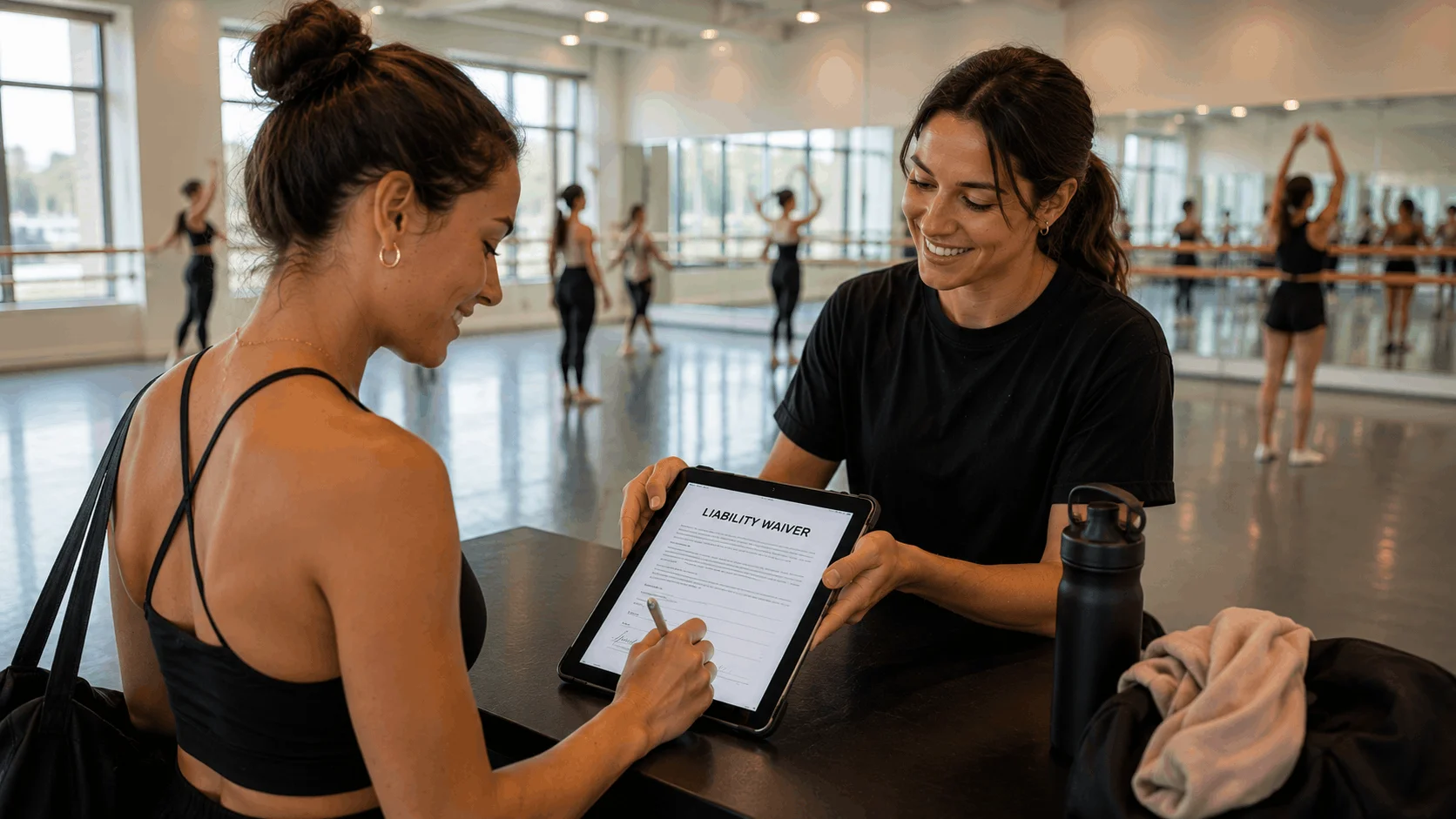
A dance studio waiver is the form a dancer, or a dancer's parent or guardian, signs before taking classes, rehearsing, performing or competing with a studio. It explains the physical risks of dance, records health information and emergency contacts, confirms the dancer will follow studio rules and instructor guidance, and releases the studio from certain claims arising from the ordinary risks of dancing.
Dance looks graceful, but it's a demanding sport. Dancers sprain ankles, strain hamstrings, fall from lifts, slip on stages and develop overuse injuries from hours of repetition. Most studio clients are children, and classes often move off-site for recitals, competitions and conventions. A clear, signed waiver gives your studio a record that families understood the risks and agreed to your policies before the first class.
This guide covers what a dance studio waiver is, what to include, how to handle minors, what changes for recitals and competitions, a sample structure you can adapt, and how to collect waivers online. It is general information, not legal advice. Waiver rules differ between countries and states, so have your final waiver reviewed for where you operate.
What is a dance studio waiver?
A dance studio waiver, also called a dance liability waiver, dance release form or dance waiver form, is a document in which the dancer or their guardian:
- confirms the classes, programs or events the dancer is enrolling in
- acknowledges the physical risks of dance training and performance
- agrees to follow studio rules, dress code and instructor guidance
- discloses injuries, health conditions or limits relevant to dancing
- consents to emergency medical treatment if needed
- releases the studio from certain claims, to the extent permitted by law
- signs and dates the form
Many studios combine the waiver with their registration form, so families complete enrollment, policies and the release in one step.
Why dance studios need a waiver
A waiver doesn't replace good teaching, safe floors or insurance, but it does several useful jobs:
- Shows informed consent. It records that the dancer or parent was told about the risks of dance before starting.
- Collects health information. Teachers learn about past injuries, asthma, allergies or other conditions before they matter in class.
- Records emergency contacts. You have a parent's number on file when a dancer is hurt at a competition three hours away.
- Sets expectations. Studio policies on attendance, conduct, tuition and photos are agreed in writing, not argued about later.
- Limits certain claims. Where local law allows, a well-written release can reduce exposure for ordinary injuries.
Courts in many places won't enforce a waiver against gross negligence, such as letting students practice aerial or acrobatic tricks without spotting or mats. For what can undermine a waiver, see what makes a liability waiver invalid.
What should a dance studio waiver include?
1. Dancer details
Collect the dancer's full name, date of birth, phone and email. For minors, add the parent or guardian's name and contact details. Date of birth helps you place dancers in the right age group and know who needs a guardian signature.
2. Classes and programs
Describe what the waiver covers. Listing the styles and activities makes the risks specific and harder to dispute later:
- ballet, pointe, jazz, tap, contemporary, lyrical and hip hop
- acro dance, tumbling and aerial work
- ballroom, Latin and partner dancing, including lifts
- pole and adult fitness dance
- rehearsals, private lessons and workshops
- recitals, performances, competitions and conventions
- travel to off-site events
3. Specific risks
Generic wording like "dance involves risk" is weaker than naming the risks. Common ones include:
- sprains, strains and muscle tears
- ankle, knee, hip and back injuries
- falls, including from turns, jumps, lifts and acro skills
- collisions with other dancers, mirrors, barres or props
- slips on studio floors or unfamiliar stages
- overuse injuries such as tendinitis and stress fractures
- foot injuries from pointe work
- dehydration, fatigue and exertion-related illness
- injuries during travel to events
Add higher-risk activities your studio offers. Acro, aerial silks and partner lifts deserve their own line.
4. Assumption of risk
A short statement where the dancer or guardian confirms they understand the risks above, that dance is physically demanding, and that they choose to take part voluntarily.
5. Health and fitness
Ask about:
- recent or ongoing injuries
- conditions such as asthma, epilepsy, diabetes or heart conditions
- allergies and medications
- pregnancy, for adult students
- anything else teachers should know
Include a commitment to tell the studio if anything changes. Keep health questions focused on what's relevant to safe participation and store answers securely.
6. Studio rules and policies
Reference the policies dancers and families must follow, such as:
- arriving on time and warming up before class
- dress code, hair and footwear requirements
- no pointe work without teacher approval
- no unsupervised acro, tricks or lifts
- no food or gum on the studio floor
- drop-off and pick-up rules for young children
- conduct and anti-bullying policies
Keep detailed tuition, refund and costume fee terms in a separate policy or registration section so the release stays readable.
7. Photo and video consent
Studios post class clips, recital photos and competition results on social media. Ask for photo and video consent as a separate checkbox, not bundled into the release, so families can opt out without refusing the whole waiver. Our photo consent form template covers this in more detail.
8. Medical treatment consent
Authorize staff to seek first aid and emergency treatment if the dancer is hurt and a parent can't be reached. This matters most at competitions and conventions, where parents may not be in the room.
9. Release of liability
The release states which claims the dancer or guardian gives up, to the extent permitted by law. Name the studio, owners, instructors, staff and any venues you use. Keep the wording clear, visible and in plain language. Our release of liability form guide explains how release wording works.
10. Signature and date
Collect the signature of the adult dancer, or the parent or legal guardian for anyone under 18, with the date. An electronic signature with a timestamp is easier to store and find than a paper form in a binder.
Dance waivers for minors
Most dance students are children, so the parent or guardian section is the most important part of your waiver:
- collect the guardian's full name, relationship to the dancer and contact details
- have the guardian sign on the child's behalf
- list authorized pick-up adults
- include medical treatment consent signed by the guardian
- ask teens to read and acknowledge the rules too, even if they can't sign the release
Some places limit how far a parent can waive a child's injury claims, so the release may not be enforceable everywhere. The waiver is still valuable for informed consent, health information and policy agreement. Our guide to waivers for minors covers this in more detail.
Recitals, competitions and conventions
Off-site events bring different risks than weekly classes:
- Unfamiliar stages. Raked floors, slippery surfaces, dim backstage areas and quick changes.
- Travel. Car pools, buses and overnight hotel stays for out-of-town competitions.
- Longer days. Back-to-back routines, early call times and limited breaks.
- Third-party venues. The theater or convention center may require its own waiver.
You can add an events section to your main waiver, or send a short event-specific waiver before each competition season. Include travel arrangements, chaperone rules and an updated emergency contact. If you also run community performances or open houses, the event liability waiver template works for attendees.
Adult and fitness dance classes
Adult classes like Zumba, barre, pole fitness and social dance attract people with very different fitness levels. For these, focus the waiver on:
- health and fitness screening, including heart conditions and pregnancy
- the right to stop or modify any movement
- risks specific to the class, such as pole climbs and inversions
- drop-in and class-pack students who may only visit once
If you run fitness classes alongside dance, the gym liability waiver and yoga liability waiver guides cover similar ground.
Dance studio waiver sample structure
Here's a simple structure you can adapt:
- Studio name and title: "Dance Studio Waiver and Release of Liability"
- Dancer information: name, date of birth, contact details
- Parent or guardian information: name, relationship, phone, email
- Classes and programs: styles, levels, events covered
- Risks of dance: a specific list for your studio
- Assumption of risk: voluntary participation statement
- Health information: injuries, conditions, allergies, medications
- Studio rules and policies: conduct, dress code, safety rules
- Photo and video consent: separate yes or no checkbox
- Medical treatment consent: permission for emergency care
- Release of liability: clear, visible release wording
- Emergency contact: name, relationship, phone
- Signature and date: adult dancer or guardian
The dance studio waiver template follows this structure and can be edited for your classes.
Common mistakes in dance studio waivers
- Using a generic gym waiver. It won't mention pointe, acro, lifts or stages.
- Letting minors sign. A child's signature on a release is usually not binding.
- Forgetting off-site events. A waiver that only mentions "classes at the studio" may not cover competitions.
- Bundling photo consent. Families who refuse photos shouldn't have to refuse the whole waiver.
- Never updating. New programs, new venues and new health information need fresh signatures, usually each season.
- Losing paper forms. A signed waiver you can't find when you need it doesn't help.
Paper vs online dance waivers
Paper waivers pile up at the front desk, get filled out in the car with missing fields, and end up in a box when a parent asks what they signed. Online waivers work better for most studios:
- families sign on their phone when they register, before the first class
- required fields stop incomplete forms
- you can search signed waivers by dancer name in seconds
- renewals are easy at the start of each season
- staff can check waivers from a tablet at competitions
For walk-ins and trial classes, set up a waiver kiosk on a tablet at the front desk, or print a QR code. See how to create a QR code waiver for the setup, and our roundup of the best waiver apps if you're comparing tools.
How to create a dance studio waiver online
You can set up an online dance waiver in a few minutes with AgreeDock.
Step 1: Start from a template or AI
Open the dance studio waiver template, or describe your studio and classes to the AI waiver generator to get a draft written for your programs.
Step 2: List your classes and risks
Edit the classes, risk list and studio policies so they match what you actually teach, including acro, pointe or adult fitness classes.
Step 3: Add dancer and guardian fields
Add date of birth, guardian details, authorized pick-up adults, health questions and a separate photo consent checkbox.
Step 4: Share the link or QR code
Add the waiver link to your registration email or website, and print a QR code for the front desk and recital check-in.
Step 5: Check before class
Before a dancer's first class or a competition, confirm a signed waiver is on file. Each signed waiver is saved with a timestamp and can be downloaded as a PDF.
Frequently asked questions
Do dance studios need a waiver?
Most dance studios use one. A waiver records that dancers or parents understood the risks of dance, collects health information and emergency contacts, confirms agreement to studio policies and, where local law allows, limits certain claims. Your insurer may also require signed waivers.
What should a dance studio waiver include?
Most include dancer and guardian details, the classes and events covered, specific dance risks, an assumption of risk, health questions, studio rules, photo and video consent, medical treatment consent, a release of liability, an emergency contact, and a signature and date.
Can a parent sign a dance waiver for a child?
Yes. A parent or legal guardian should sign for any dancer under 18, or the age of majority where you operate. Some places limit how far a parent can waive a child's injury claims, so check local rules.
Does a dance waiver cover recitals and competitions?
Only if it says so. Mention recitals, competitions, conventions and travel in the waiver, or use a separate event waiver before each season. The venue may also ask dancers to sign its own waiver.
How often should dancers sign a new waiver?
Many studios collect a new waiver at the start of each season or school year, and whenever they add higher-risk programs such as acro or travel to competitions. This keeps health information and contacts up to date.
Can dance waivers be signed online?
Yes. Electronic signatures are recognized in many countries, including under the ESIGN Act and UETA in the United States. Families can sign on their phone during registration or by scanning a QR code at the studio, and you keep a timestamped record of each waiver.